






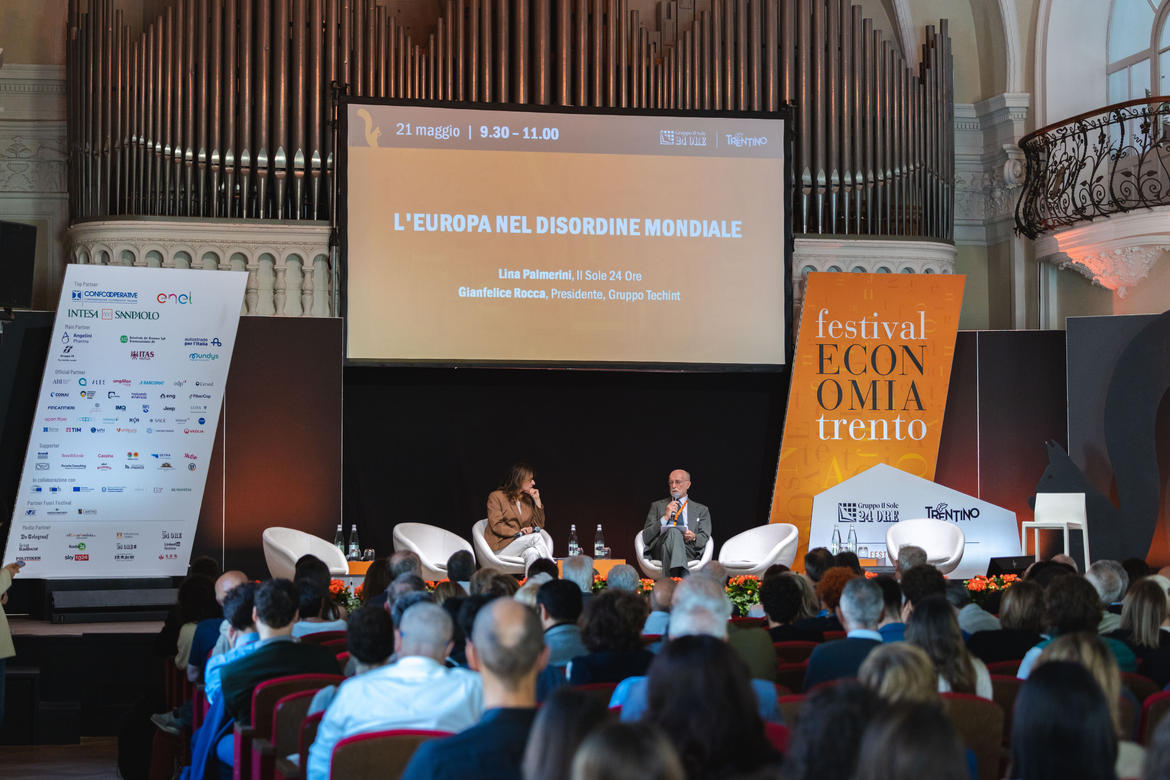
Europe must define its own path instead of mirroring the strategies of the United States or China: that is one of the core messages from the event. Speakers agreed that Europe’s competitive advantage may lie in strengthening partnerships with medium powers such as Australia, Canada, India, and Brazil.
Gianfelice Rocca warned against the risks of deindustrialisation, stressing that industry remains “the backbone of economic systems”. Referring to the meeting between Donald Trump, Xi Jinping, and leading tech executives, he observed how “state capitalism met super capitalism”, highlighting the growing link between economic power and technology. He argued that Europe must avoid a “me too” strategy and instead develop its own industrial vision based on competitiveness, resilience, and strategic autonomy, stressing that Europe’s industrial base and export capacity remain key strengths in a changing global context.
Marco Buti argued that Europe can no longer rely on the post-war framework that for decades supported its stability through external security guarantees and a strong international institutional system led by the United States. This model is no longer in place, and Europe must strengthen its own economic resilience and political capacity. He also called for reforms to capital markets to reinforce Europe’s ability to respond to global change. Spanish Ambassador Miguel Fernández-Palacios stressed that Europe still lacks a coherent strategy on defense. “We are obsessed with defense, but we do not have a plan,” he said, warning against industrial selfishness among member states and calling for greater investment in security, technology, and diplomacy, among others. Marcello Messori underlined the need to strengthen the European dimension beyond national interests. He stressed the importance of overcoming fragmentation between member states and fostering innovation by connecting different company sizes and industrial structures within Europe. Simona Camerano highlighted the role that institutions such as Cassa Depositi e Prestiti can play in supporting Europe’s industrial transformation. She stressed the importance of “patient capital” and public-private cooperation in directing savings towards the real economy, innovation, and research. In his concluding remarks,Giancarlo Corsetti argued that “the limited responsibility model of Europe is over”, stressing that it is time to decide whether the internal diversity should be seen as a weakness or as a strategic asset. He underlined the importance of investing in youth, innovation, and international partnerships, and of strengthening Europe’s capacity to adapt to technological and economic transformation, summing up the main points that emerged during the discussion.
The discussion provided a broad reflection on Europe’s current position in a changing global context, within the framework of the Florence Report. It highlighted the need for Europe to strengthen its economic and industrial capacity, invest in innovation, and maintain openness to international partnerships. A common thread across the interventions was the importance of building a more coordinated European approach capable of responding to global challenges while valuing internal diversity as a potential strength.


